Ever wondered how traditional Malaysian dodol is made? In Muar, Johor, visitors can experience the entire process firsthand through a unique homestay programme, learning from local villagers who have preserved this heritage recipe for generations.
When it comes to dodol, most people immediately think of Melaka or perhaps the markets of Hat Yai. But during my recent visit to Muar, Johor, I discovered that this beloved traditional delicacy can be experienced in a much more meaningful way, not by buying it, but by making it from scratch alongside the locals.
As part of a homestay programme, I had the opportunity to learn the traditional method of cooking dodol from the villagers themselves. It was more than just a cooking lesson; it was a glimpse into a way of life passed down through generations. And trust me, after spending hours stirring a giant wok of dodol, you’ll never look at this sweet treat the same way again.
The Secret Behind a Perfect Dodol
Before the cooking even begins, there’s an interesting preparation step that many people may not know. The villagers first clean the large iron wok using santan (coconut milk). According to them, this helps prepare the wok for the long cooking process. Once ready, the real work begins.
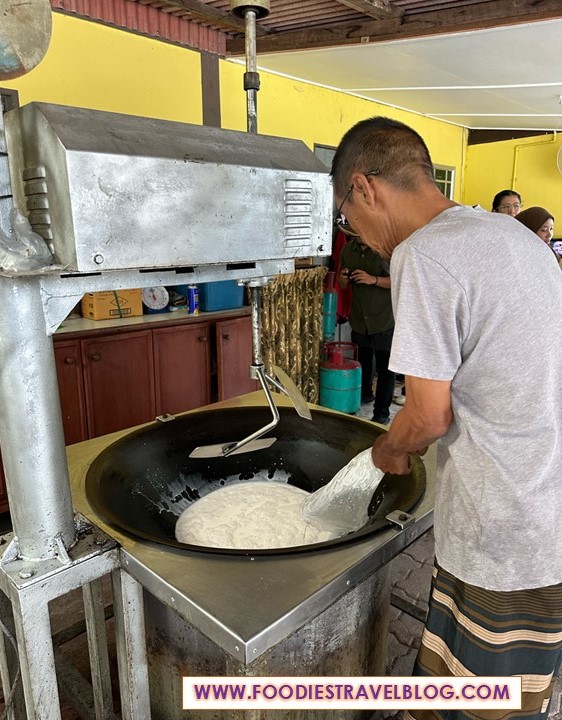
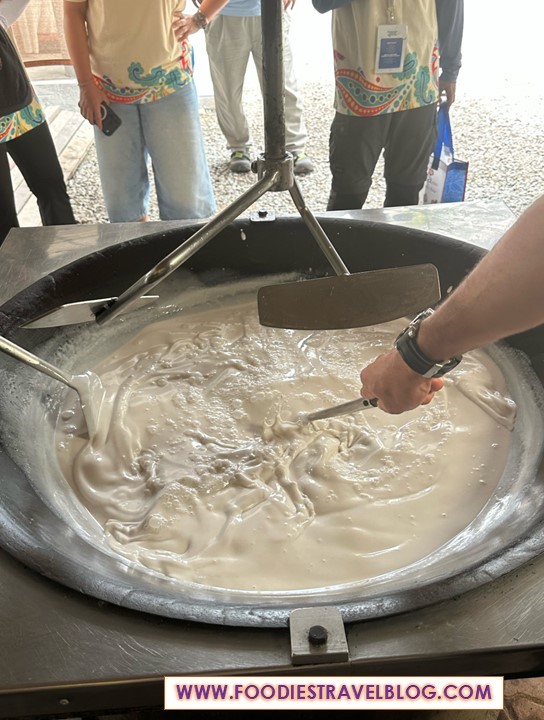
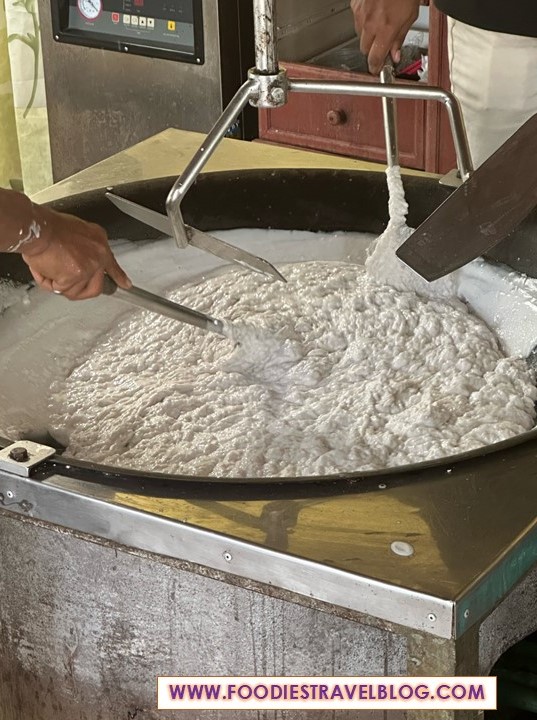
A whopping 16kg of santan (coconut milk) is poured into the wok together with a pinch of salt. The mixture must be stirred continuously while being heated to prevent it from sticking or thickening at the bottom.
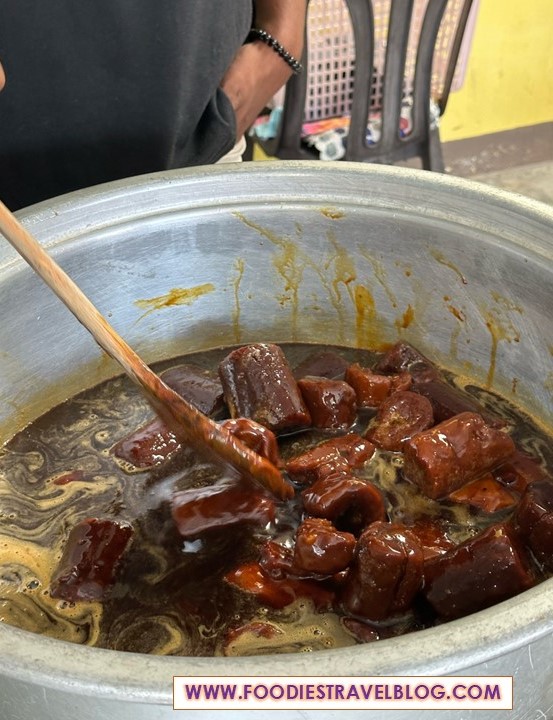
Meanwhile, on a separate stove, 6.5kg of gula kelapa (coconut sugar) is slowly melted. Interestingly, the villagers shared that the coconut sugar used here is sourced from Indonesia.
At the same time, another team prepares a mixture of 5kg of rice flour and water, ensuring it is thoroughly mixed and sifted before being added to the coconut milk. Once combined, approximately 8kg of water, 2.5kg of sugar, and one or two packets of rock sugar are added. A small amount of preservative is also included to prevent fungal growth and prolong freshness.
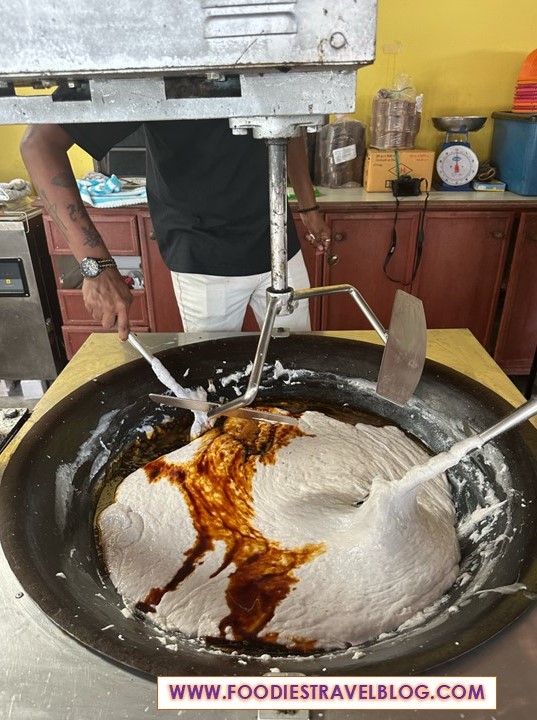
The final step is where patience truly comes into play. The melted coconut sugar is poured into the mixture, and everyone takes turns stirring the giant wok for at least five hours.
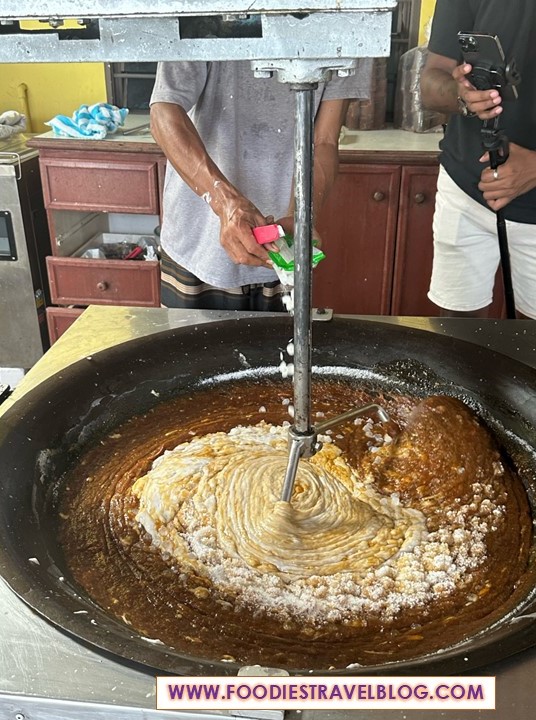
Five hours. No shortcuts. No instant methods. Just continuous stirring, teamwork, and plenty of conversations in between.
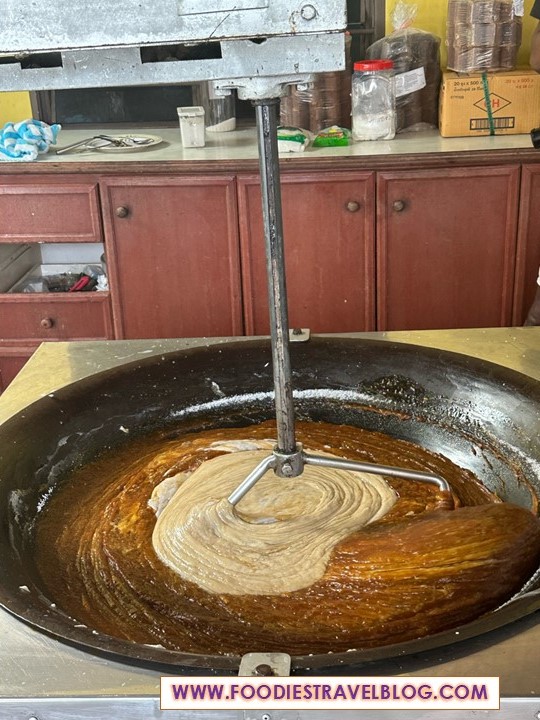
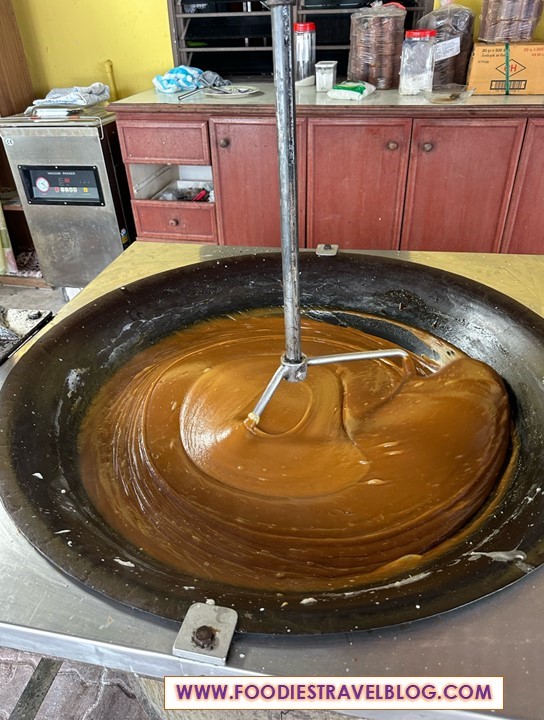
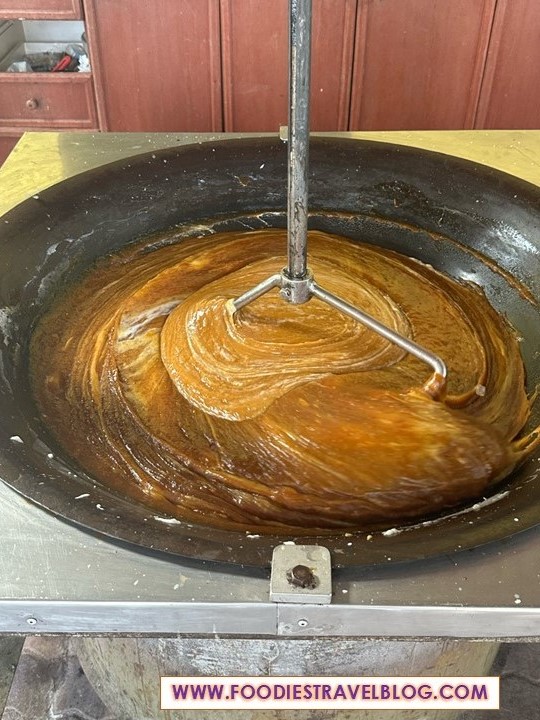
Slowly but surely, the mixture transforms into the thick, sticky, aromatic dodol that we all know and love. Once the desired consistency is achieved, the dodol is left to cool before it is ready to be enjoyed.
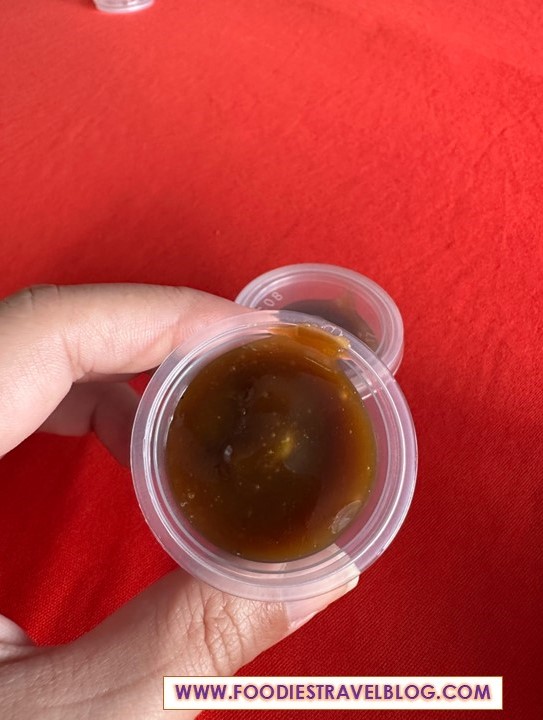
What struck me most wasn’t the recipe itself, but the communal spirit behind the process. Making dodol is not a one-person job. It requires cooperation, patience, and plenty of helping hands. Throughout the session, stories were shared, laughter filled the air, and I found myself learning not only about dodol but also about the villagers’ daily lives, traditions, and culture.
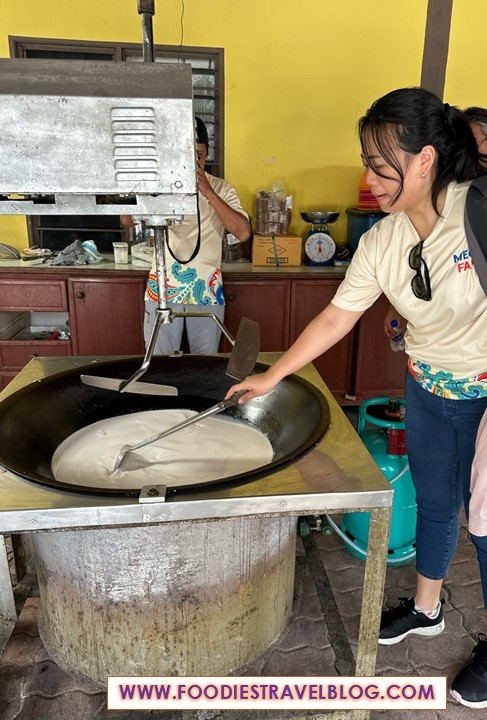
It reminded me that food is often more than something we eat. It is a way of bringing people together.
**********
Fun Facts About Dodol
1. Rock Sugar Creates the Shine
The addition of rock sugar isn’t just for sweetness. It helps give the dodol its beautiful glossy appearance.
2. The Wok Matters
Traditional dodol must be cooked in a kuali besi (iron wok). Stainless steel and other types of cookware simply do not produce the same result.
*************
If you’ve ever been curious about how dodol is made, the homestay programme at Kampung Sungai Sarang Buaya offers visitors the chance to experience it firsthand. It’s not every day that you get to learn a traditional recipe directly from the people who have been making it for generations.
More importantly, it’s an opportunity to connect with the local community, understand their way of life, and appreciate the traditions that continue to shape rural Malaysia today. As for me, I left with a deeper appreciation for dodol and a newfound respect for anyone who spends five hours stirring a hot wok!
Would I do it again?
Absolutely. The real sweetness wasn’t just in the dodol itself, but in the memories and friendships made along the way.
Written by,
FoodiesTravelblog
Ps: This is based on my personal opinion

Red Bean Bag Damansara Review: Salad, Grainy Bunch & The Kraken
2026-10-20

Strangers One Utama Review: Savoury Crepes, Pasta & Desserts
2026-10-18

Penang Sister Yao's Char Koay Kak: A Legendary Penang Breakfast You Must Try
2026-09-19

Old Green House Restaurant Penang: Hokkien Mee & Char Kuey Teow at Jalan Burma
2026-09-14

Loh Kei Duck Kway Teow Th’ng Penang: A Hearty Bowl Worth Waking Up For
2026-09-10
Red Bean Bag Damansara Review: Salad, Grainy Bunch & The Kraken
2026-10-20
Strangers One Utama Review: Savoury Crepes, Pasta & Desserts
2026-10-18
Penang Sister Yao's Char Koay Kak: A Legendary Penang Breakfast You Must Try
2026-09-19
Old Green House Restaurant Penang: Hokkien Mee & Char Kuey Teow at Jalan Burma
2026-09-14
Loh Kei Duck Kway Teow Th’ng Penang: A Hearty Bowl Worth Waking Up For
2026-09-10
AD HERE


